VENUE CASE STUDY / 01
The Exchange NW1
A former Job Centre found another reason for people to come through the door.

33,000 sq ft
Former civic building.
20+
Additional workspaces created during the project.
40+
Businesses, practitioners and organisations supported.
12,000+
Recorded attendance instances through May 2026.
01 / STARTING POINT
The building had stopped serving its original purpose. It had not stopped being useful.
When Disndat became involved, The Exchange had substantial space but no settled answer for what the building should become.
The question was who should be there, what different parts of the building could support and what would give people a reason to return.


02 / DEMAND
The first job was not to build more. It was to prove that more was needed.
Disndat began bringing businesses, practitioners and cultural operators into the conversation around the building.
As credible demand became visible, the directors funded the creation of approximately twenty additional workspace opportunities.
The important part was not the partitions.
Demand changed the physical building.
03 / OCCUPATION
A full building is not necessarily a useful one.
The Exchange became more interesting when different kinds of occupation began reinforcing one another.
Music production sat alongside fashion, photography, hospitality, design, independent business, charity and public programming.
People came for different reasons, but increasingly used the same infrastructure.
MINUS ONE / BPM
Permanent music-production infrastructure alongside recurring public programming.
KNOWN SOURCE
Resident vintage business whose markets repeatedly brought large audiences into the building.
SIPSLOW
Street-facing hospitality and a point of everyday public contact.
THREAD AHEAD
Clothing, community and social-value activity.
ARTISTS + CULTURAL OPERATORS
Exhibitions, performances and independent cultural activity.
PRODUCTION + CREATIVE BUSINESSES
Photography, film, design, media and commercial production.
04 / ACTIVITY
The building began receiving people at very different scales.
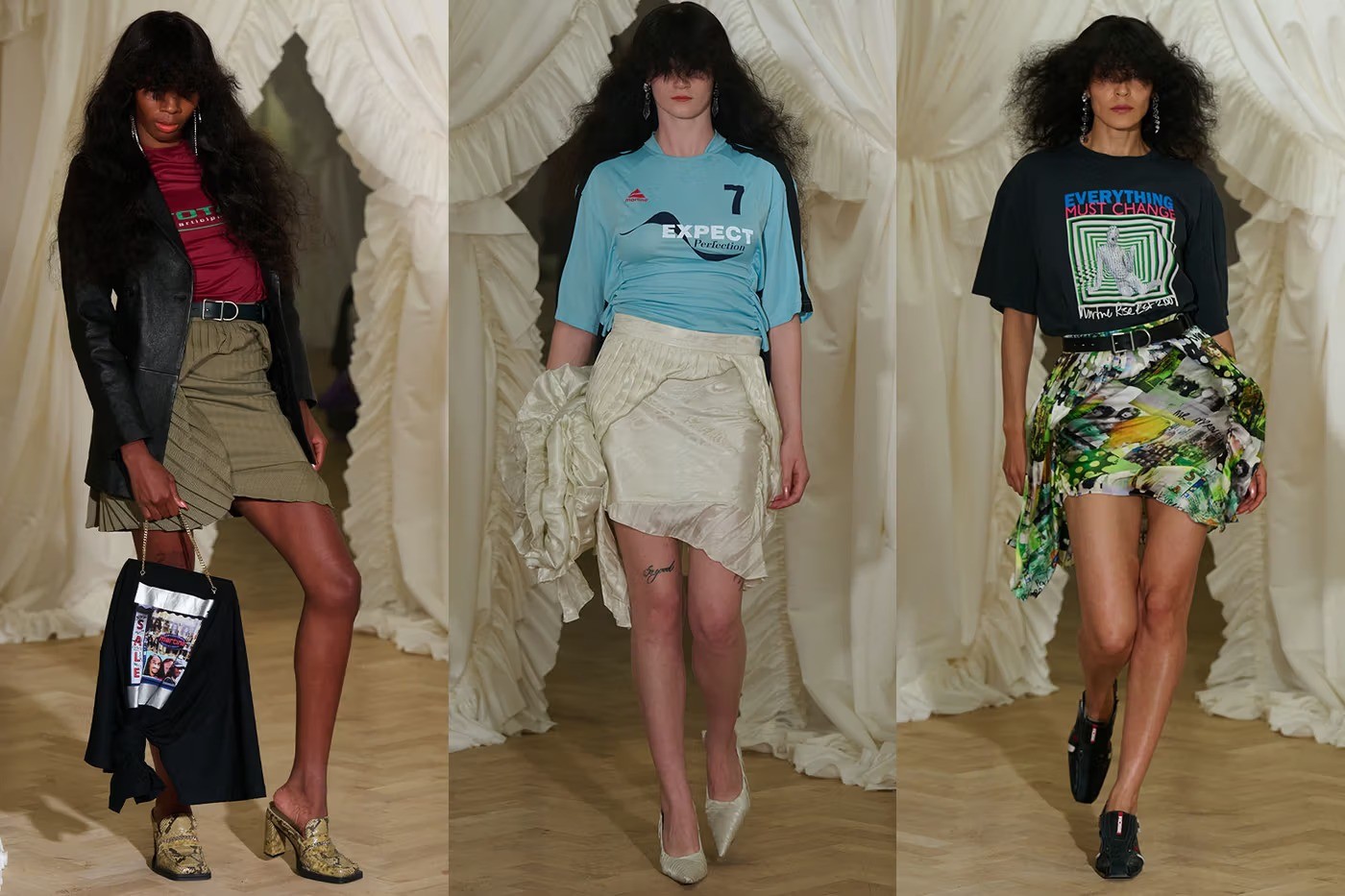
MARTINE ROSE SS26
700
Recorded attendance across the runway presentation and public marketplace.
An internationally visible fashion moment took place inside a former Job Centre without requiring the building to pretend it was something else.
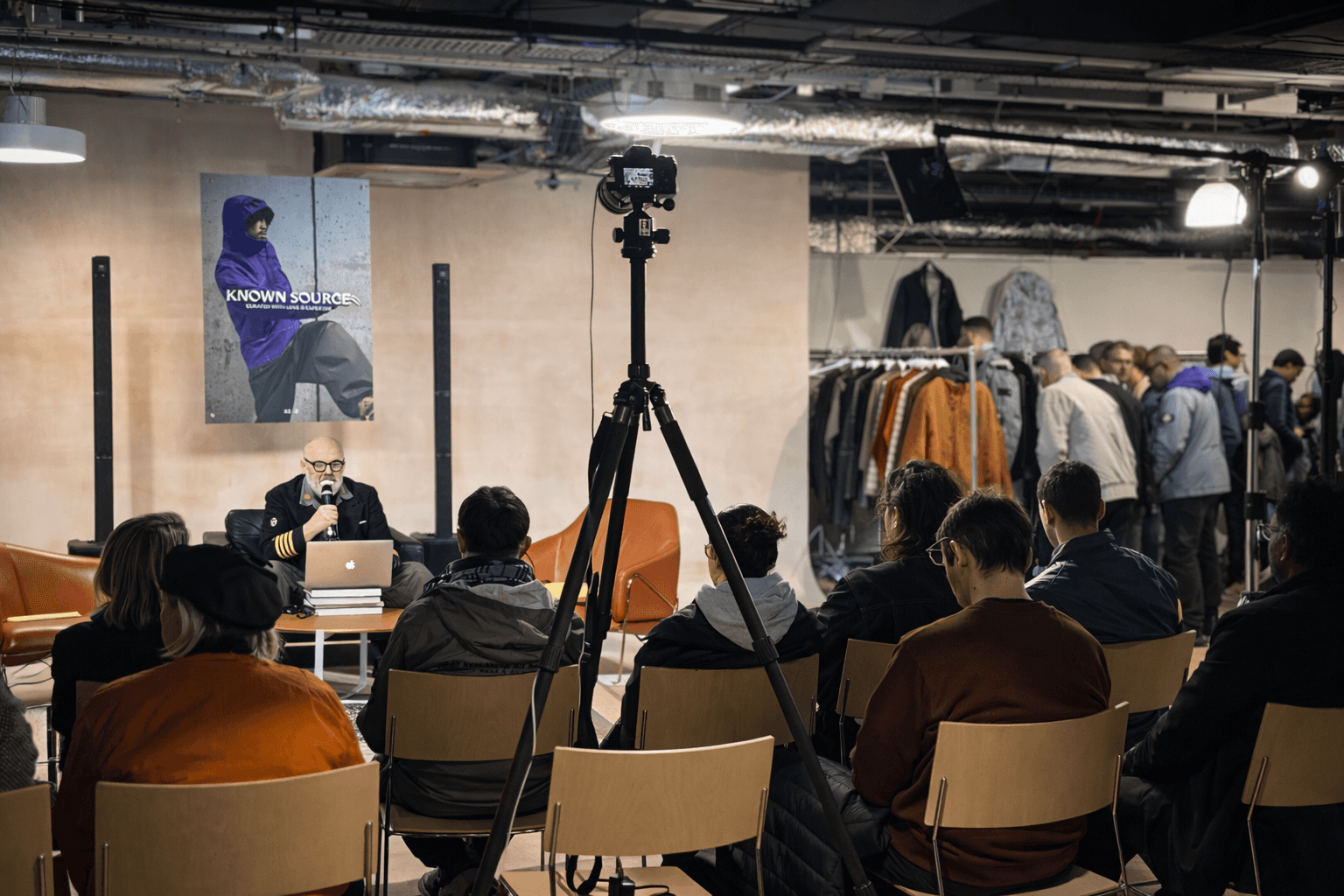
KNOWN SOURCE
3,500
Recorded attendance instances across five major programme groupings.
A resident business repeatedly turned its presence in the building into a reason for thousands of other people to enter it.

RAMADAN AT THE EXCHANGE
1,200
Recorded attendance instances across the wider month-long programme.
Recorded attendance instances across the wider programme.
Prayer, discussion, food, charity and community activity occupied the same building used for fashion, music and commercial production.
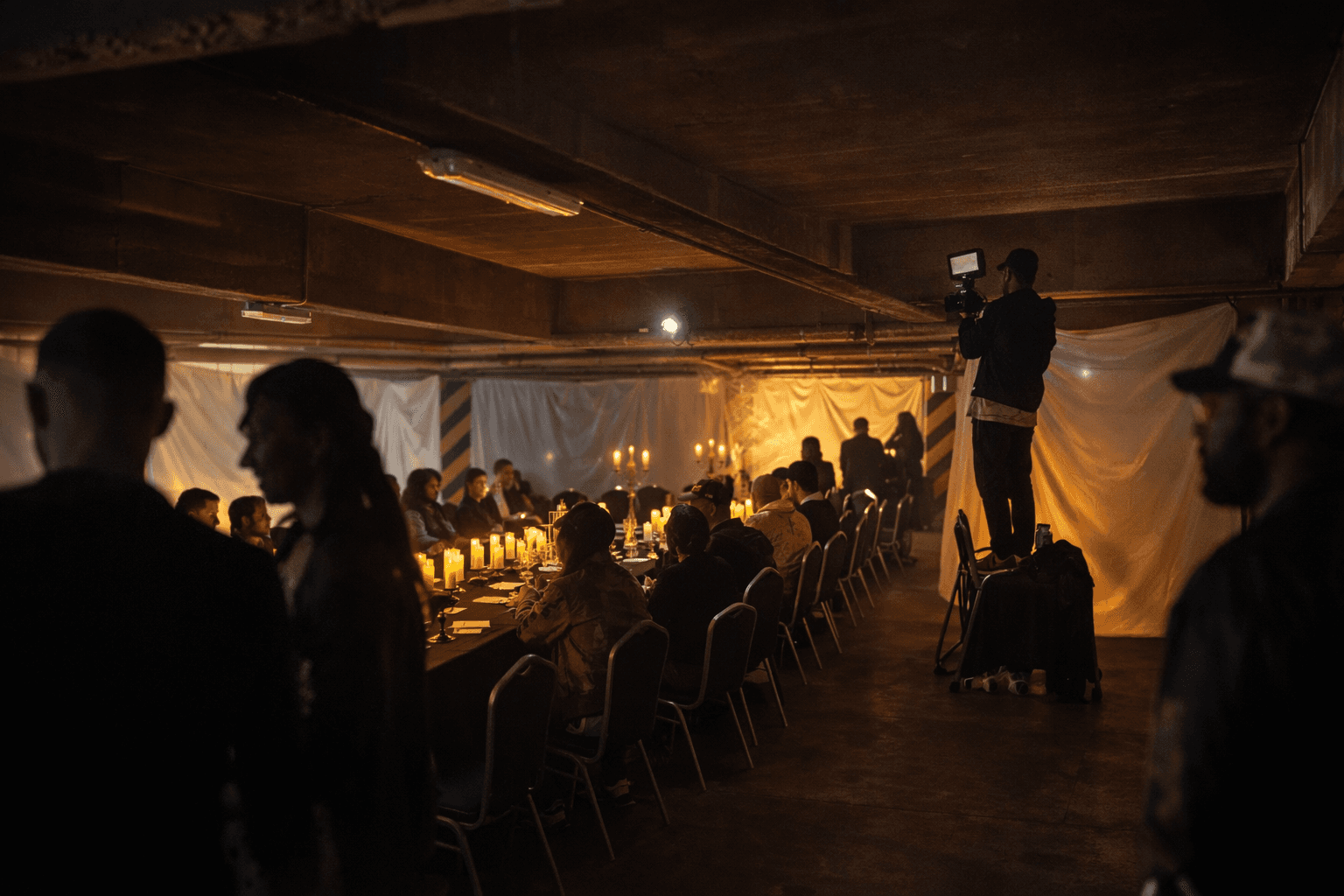
BPM / MINUS ONE
600
Recorded attendance across music and entertainment-led initiatives.
The basement developed from production space into infrastructure capable of generating its own recurring programme.
05 / DISNDAT'S ROLE
Our role was not to make everything happen. It was to make more things possible.
Disndat was not the owner of The Exchange and did not remain its long-term building operator.
Our role sat between the property and the people who could make use of it.
READ THE BUILDING
Understanding what different spaces could realistically support before deciding what to put inside them.
BUILD OCCUPATION
dentifying and introducing businesses, practitioners and operators capable of contributing to the building rather than simply filling it.
CREATE CONNECTIONS
Bringing together occupiers, brands, cultural practitioners, partners and audiences where one could create value for another.
DEVELOP ACTIVITY
Using events, markets, hospitality, production and programming to create footfall, commercial opportunity and reasons to return.
SUPPORT THE REALITY
Working through access, utilities, rates, security, licensing, compliance, occupier relationships and the practical constraints behind the cultural proposition.
06 / WHAT HAPPENED AFTERWARDS
The strongest activity stopped needing to originate from us.
By the later stages of the project, the people inside The Exchange were increasingly generating their own programmes, audiences and opportunities.
Minus One developed recurring music activity.
Known Source repeatedly filled the building through its markets.
SipSlow created its own community programming.
Resident businesses brought clients, collaborators and audiences through the door.
The building had stopped behaving like empty property waiting to be activated.
It had become infrastructure that other people knew how to use.
The more important outcome was what no longer required us.
That was the point.


THE NUMBERS
12,717
Recorded attendance instances.
~ 46
Consolidated activities and programmes.
40+
Resident businesses and operators.
25+
Additional workspace opportunities created.
COMMERCIAL ACTIVITY
Developing production, markets, events and other revenue-generating opportunities.
OPERATING EXPERIENCE
Learning first-hand about access, utilities, rates, security, licences, compliance, occupier management and the realities of temporary property.
WHAT THE EXCHANGE TAUGHT US
A failed use does not mean a failed place.
The Exchange gave Disndat direct experience of what happens after a building's original purpose has ended but before its longer-term future is settled.
It showed us that the opportunity is not simply in occupying vacant space.
It is in recognising what remains useful and building a viable structure around it.
01 / START WITH DEMAND
Do not build an answer before understanding who actually wants to use the place.
02 / THE MIX MATTERS
Occupation becomes more valuable when the people inside a building create reasons for one another, and for others, to return.
03 / PUBLIC AND COMMERCIAL USE CAN SUPPORT EACH OTHER
Markets, production, hospitality, workspace, cultural activity and community use do not have to exist separately.
04 / ACTIVITY HAS TO SUPPORT THE PLACE
Programming matters most when it generates audience, relationships, business or recurring use rather than activity for its own sake.
05 / THE UNGLAMOROUS PARTS DECIDE WHAT SURVIVES
Rates, utilities, access, security, licensing, insurance and compliance determine whether a good idea can actually continue.
06 / SUCCESS SHOULD TRAVEL DOWNSTREAM
The strongest places eventually generate activity without requiring one organisation to manufacture every reason for people to be there.
That experience became the foundation for Disndat Places.
PRINCIPLE
Buildings can outlive the models that once sustained them.
The Exchange did not remain a Job Centre.
That did not mean the building had stopped having a public life.
The same question now informs how Disndat looks at pubs, clubs, music venues, halls, cinemas, restaurants and other places whose future has become uncertain:
What is still useful here, what needs to change and who could give the place another viable reason to receive people?
See how an underground part of the wider site developed into a standalone event venue.
CONTACT
Know a place reaching that point?
We are interested in buildings whose public use is becoming uncertain, particularly before their future has already been decided.
hello@disndatltd.com →
Talk to us.
hello@disndatltd.com
+44 (0)793997 4445